You reach for a word — and it simply is not there. You walk into a room and forget why. You read the same paragraph twice and still cannot retain it. If you are over 60, this experience has a name: brain fog . And you are far from alone.
Brain fog affects an estimated 600 million adults worldwide and becomes markedly more prevalent after age 55. But here is what most people do not know: significant brain fog in older adults is not an inevitable consequence of aging. In the vast majority of cases, it has identifiable, treatable causes — and proven strategies to reverse it.
This guide covers everything you need to know: what brain fog actually is at a biological level, its most common causes in seniors, how to tell it apart from more serious cognitive decline, and the evidence-based approaches — lifestyle, nutrition, and supplementation — that clinical research supports for restoring mental clarity.
What Is Brain Fog? The Biology Behind the Haze
Brain fog is not a clinical diagnosis — it is a symptom cluster describing a state of reduced mental clarity, cognitive slowness, difficulty concentrating, and mental fatigue. Neurologists sometimes call it "cognitive cloudiness" or "subjective cognitive impairment." It feels like thinking through wet concrete.
At a biological level, brain fog typically involves one or more of the following disruptions:
- Neuroinflammation — chronic low-grade inflammation in brain tissue interferes with synaptic signaling and neurotransmitter production.
- Reduced cerebral blood flow — the brain receives less oxygen and glucose, slowing processing speed and reducing working memory capacity.
- Neurotransmitter imbalances — declining acetylcholine, dopamine, or serotonin disrupt attention, mood, and memory consolidation.
- Mitochondrial dysfunction — brain cells generate less ATP energy, creating cognitive fatigue even without physical exertion.
- Disrupted sleep architecture — poor deep sleep impairs glymphatic clearance, the brain's overnight "waste removal" system.
"Cognitive fog in older adults is frequently multifactorial — and frequently reversible. The mistake is assuming it is simply 'normal aging' without investigating the underlying contributors."
— Neurological aging research consensus, 2025The 8 Most Common Causes of Brain Fog in Adults Over 60
Understanding the cause is the essential first step. Here are the eight causes most frequently identified in clinical evaluations of older adults presenting with cognitive cloudiness:
1. Nutritional Deficiencies
Three deficiencies account for a significant majority of reversible brain fog in seniors: vitamin B12 (essential for myelin sheath integrity and neurotransmitter synthesis), vitamin D3 (which modulates neuroinflammation and calcium signaling in neurons), and omega-3 fatty acids (structural components of neuronal membranes). B12 deficiency is particularly common in older adults due to reduced gastric acid production limiting absorption.
2. Poor Sleep Quality
Deep sleep (slow-wave sleep) is when the brain's glymphatic system — its internal waste-clearance mechanism — operates most efficiently. This nightly process removes metabolic byproducts including beta-amyloid and tau proteins. As sleep quality declines with age, glymphatic clearance becomes less effective, leading to a gradual accumulation of these proteins. Even one night of poor sleep measurably increases beta-amyloid accumulation in the brain by up to 5%.
3. Neuroinflammation
Chronic low-grade inflammation — often called "inflammaging" — is now recognized as a central driver of cognitive decline in older adults. It can be triggered by a poor diet (high in refined carbohydrates and seed oils), sedentary behavior, chronic stress, gut microbiome imbalances, and environmental exposures. Inflammatory cytokines cross the blood-brain barrier and disrupt neurotransmitter function, producing exactly the mental sluggishness described as brain fog.
4. Medication Side Effects
Many commonly prescribed medications in adults over 60 carry cognitive side effects. Anticholinergic drugs (including some antihistamines, bladder medications, and antidepressants), benzodiazepines, proton pump inhibitors (which reduce B12 absorption), and certain blood pressure medications are among the most frequently implicated. A medication review with your physician can sometimes produce dramatic cognitive improvement.
5. Thyroid Dysfunction
Hypothyroidism — underactive thyroid — is frequently underdiagnosed in older adults and presents almost identically to general brain fog: cognitive slowness, fatigue, word-finding difficulty, and memory impairment. It is estimated that 10% of adults over 65 have undiagnosed thyroid dysfunction. A simple blood TSH test can rule this out.
6. Dehydration
The brain is approximately 75% water. Even mild dehydration — as little as 1–2% of body water — measurably reduces cognitive performance, attention, and working memory. Older adults have a blunted thirst response, making them particularly vulnerable to chronic low-level dehydration without feeling thirsty. Studies show that most adults over 65 consume significantly less water than recommended.
7. Chronic Stress and Cortisol Elevation
Prolonged psychological stress elevates cortisol, which at chronically high levels has neurotoxic effects on the hippocampus — the brain's primary memory-processing center. High cortisol also impairs the production of brain-derived neurotrophic factor (BDNF), a protein essential for neural plasticity and the formation of new memories.
8. Sedentary Behavior
Physical inactivity directly reduces cerebral blood flow and the production of BDNF. Multiple large studies have found that older adults who engage in regular moderate aerobic exercise have measurably larger hippocampal volumes, faster processing speeds, and lower rates of cognitive decline. Even 30 minutes of brisk walking five times per week produces measurable cognitive benefits.
| Cause | How Common | Reversibility | Primary Intervention |
|---|---|---|---|
| B12 / D3 Deficiency | Very Common | High | Supplementation + diet |
| Poor Sleep Quality | Very Common | High | Sleep hygiene + apnea treatment |
| Neuroinflammation | Very Common | Moderate-High | Diet, exercise, anti-inflammatory supplements |
| Medication Side Effects | Common | High | Medication review with physician |
| Thyroid Dysfunction | Common | Very High | TSH test + thyroid medication |
| Chronic Dehydration | Very Common | Very High | Consistent hydration habit |
| Chronic Stress | Common | Moderate | Stress reduction, adaptogens |
| Sedentary Behavior | Very Common | High | Aerobic exercise program |
Brain Fog vs. Dementia: How to Tell the Difference
This distinction matters enormously — both for appropriate treatment and for peace of mind. Brain fog and early dementia can feel similar from the inside, but they differ in several critical ways:
If cognitive symptoms appeared suddenly (within hours or days), are accompanied by headache, fever, vision changes, weakness, or speech difficulties — seek emergency medical evaluation. These can indicate stroke, infection, or other urgent conditions requiring immediate treatment.
| Feature | Brain Fog | Dementia (early) |
|---|---|---|
| Onset | Gradual or tied to triggers | Gradual, progressive |
| Fluctuation | Varies day to day; has good days | Consistently impaired; worsens over months |
| Self-awareness | High — person notices and is frustrated | Often reduced — person may not recognize deficits |
| Daily function | Largely preserved | Increasingly impaired |
| Reversibility | Usually reversible with intervention | Progressive, not reversible |
| Memory type affected | Working memory, attention, recall speed | New memory formation, language, judgment |
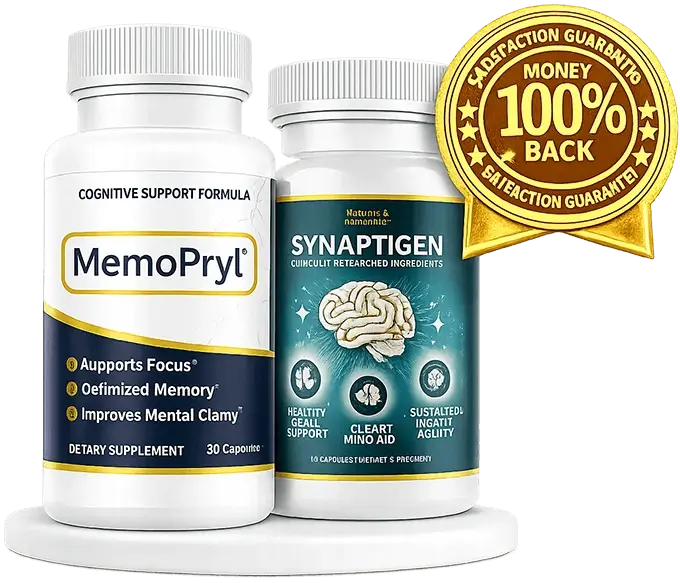
Supporting brain clarity naturally: MemoPryl combines Bacopa Monnieri, Rhodiola Rosea, Panax Ginseng and L-Theanine — ingredients with peer-reviewed evidence for cognitive support in adults 60+.
Learn More →7 Science-Backed Strategies to Clear Brain Fog Naturally
The following approaches are supported by clinical research. Most can be implemented immediately, at no cost, and show measurable effects within weeks.
Strategy 1: Optimize Your Sleep Architecture
Prioritize sleep quality, not just quantity. Target 7–8 hours with emphasis on maximizing deep sleep and REM cycles. Key tactics: maintain a consistent sleep-wake schedule (including weekends), avoid screens 90 minutes before bed, keep the bedroom between 65–68°F (18–20°C), and eliminate alcohol — which suppresses REM sleep despite inducing drowsiness. If you snore loudly or wake unrefreshed, ask your doctor about a sleep apnea screening.
Strategy 2: Anti-Inflammatory Nutrition
A diet that reduces neuroinflammation is one of the most powerful tools available. Focus on: fatty fish (salmon, sardines, mackerel) for DHA; leafy greens for folate and lutein; berries for anthocyanins; olive oil for oleocanthal; and fermented foods for gut microbiome diversity. Minimize refined sugar, ultra-processed foods, and seed oils. The MIND diet — a Mediterranean-DASH hybrid specifically designed for brain health — has been shown to reduce cognitive decline rates by up to 53% in high-adherence populations.
Strategy 3: Consistent Aerobic Exercise
Exercise is the single most evidence-supported intervention for brain health in aging adults. Aerobic activity increases cerebral blood flow, stimulates BDNF production, reduces neuroinflammation, and has been shown to increase hippocampal volume by up to 2% per year. Aim for at least 150 minutes of moderate aerobic exercise weekly. Brisk walking, swimming, cycling, and dancing all qualify — and research suggests variety produces superior cognitive benefits.
Strategy 4: Address Nutritional Deficiencies
Get blood levels tested for B12, D3, iron, and omega-3 index. Supplement deficiencies under medical supervision. For B12, methylcobalamin (the active form) is better absorbed than cyanocobalamin, particularly in adults over 60 with reduced gastric acid. Omega-3 supplementation (1–2g EPA+DHA daily) has demonstrated benefits for working memory and processing speed in older adults in multiple randomized trials.
Strategy 5: Stress Reduction and Social Engagement
Chronic psychological stress is neurotoxic at the biological level. Evidence-based stress reduction approaches include: mindfulness meditation (even 10 minutes daily lowers cortisol measurably), regular social interaction (isolation is as damaging to cognitive health as smoking 15 cigarettes per day per one landmark study), and purpose-driven activities. Learning a new skill — a language, instrument, or craft — is particularly potent for neural plasticity.
Strategy 6: Hydration Protocol
Start each morning with 16 oz (500ml) of water before coffee. Aim for half your body weight in ounces daily. Set hourly reminders if needed — the thirst reflex is unreliable after 60. Herbal teas count toward totals; moderate coffee consumption is actually associated with reduced cognitive decline risk in longitudinal studies.
Strategy 7: Evidence-Based Cognitive Supplementation
Several natural compounds have peer-reviewed clinical evidence supporting their role in clearing brain fog and supporting cognitive function in older adults. The key is understanding what each one does, what the research actually shows, and appropriate expectations.
The 6 Most Researched Natural Nootropics for Brain Fog Relief
Not all supplements are equal. The compounds below have accumulated genuine clinical evidence — multiple randomized controlled trials, not just animal studies or testimonials.

Bacopa Monnieri
Reduces anxiety-driven cognitive interference and measurably improves information processing speed and memory consolidation. Multiple meta-analyses confirm benefits in adults 55+. Requires 8–12 weeks for full effect. Mechanism: increases dendritic branching and reduces cortisol.
Ginkgo Biloba
Increases cerebral blood flow and acts as an antioxidant specifically in brain tissue. Particularly effective for the vascular component of brain fog. Clinical studies show improvements in memory recall speed, attention, and executive function in adults over 60. Standardized to 24% flavone glycosides.
Lion's Mane Mushroom
Uniquely stimulates the production of Nerve Growth Factor (NGF), which supports myelin sheath integrity and synaptic density. A 2023 randomized trial showed significant improvements in cognitive function in adults 50–80 over 12 weeks. Also demonstrates anti-neuroinflammatory properties.
L-Theanine
Amino acid found in green tea that promotes alpha brain wave activity — the mental state associated with focused, calm attention. Reduces anxiety-driven cognitive fog without sedation. Synergistic with caffeine, producing sharper focus without jitteriness. Fast-acting: effects within 30–60 minutes.
Phosphatidylserine (PS)
A phospholipid essential for neuronal membrane integrity and cellular communication. Has an FDA-qualified health claim for cognitive function. Clinical trials demonstrate improvements in memory formation, attention, and cognitive processing speed. Natural phosphatidylserine from sunflower lecithin is preferred over bovine-derived versions.
Rhodiola Rosea
An adaptogenic herb that reduces cortisol and mental fatigue. Particularly effective for brain fog driven by chronic stress and burnout. Multiple randomized trials demonstrate improvements in mental performance under fatigue conditions. Works best in adults whose cognitive symptoms correlate with stress and exhaustion.
| Ingredient | Primary Mechanism | Time to Effect | Evidence Level | In MemoPryl |
|---|---|---|---|---|
| Bacopa Monnieri | Memory consolidation, cortisol reduction | 8–12 weeks | Multiple RCTs | ✓ |
| Ginkgo Biloba | Cerebral blood flow, antioxidant | 4–8 weeks | Multiple RCTs | ✓ |
| Lion's Mane | NGF stimulation, neurogenesis | 8–16 weeks | RCT + animal | ✓ |
| L-Theanine | Alpha waves, anxiety reduction | 30–60 min | Multiple RCTs | ✓ |
| Phosphatidylserine | Neuronal membrane integrity | 6–12 weeks | FDA-recognized | ✓ |
| Rhodiola Rosea | Adaptogen, cortisol regulation | 2–4 weeks | Multiple RCTs | ✓ |
What to Realistically Expect: A Week-by-Week Recovery Timeline
Managing expectations is critical for staying consistent with any cognitive health program. Here is what peer-reviewed research — and the consistent experiences of users — suggests for a multi-pronged approach combining lifestyle changes and supplementation:
Days 1–7: Better hydration and sleep hygiene produce the fastest results — many people report noticeably clearer mornings within 3–5 days. L-Theanine, if taken, shows effects within the same day.
Weeks 2–4: Exercise benefits begin accumulating. Dietary changes reduce systemic inflammation. Early users of adaptogenic supplements like Rhodiola often notice reduced mental fatigue in this window.
Weeks 6–9: Focus sharpens noticeably for most users following a consistent protocol. Ginkgo and Phosphatidylserine effects typically peak in this window.
Weeks 10–12: Bacopa Monnieri reaches full effect. Memory consolidation, processing speed, and word retrieval show the most significant improvements. Users often describe this stage as feeling like themselves again.
How MemoPryl Addresses the Root Causes of Brain Fog
Rather than masking symptoms with stimulants, MemoPryl is formulated to address the underlying biological mechanisms most commonly associated with brain fog in adults over 60. Each ingredient targets a specific pathway:
- Bacopa Monnieri — reduces cortisol-driven cognitive interference and rebuilds memory consolidation pathways over 8–12 weeks of consistent use.
- Ginkgo Biloba — directly improves cerebral blood flow, addressing one of the primary vascular contributors to mental cloudiness in older adults.
- Lion's Mane Mushroom — stimulates NGF production, supporting the structural integrity of the neural networks responsible for attention and memory.
- L-Theanine — promotes the alpha wave state associated with calm focus; reduces anxiety-driven cognitive interference on the same day it is taken.
- Phosphatidylserine — the only ingredient with an FDA-qualified health claim specifically related to cognitive function; essential for neuronal membrane health.
- Rhodiola Rosea — the adaptogenic component; specifically beneficial for users whose brain fog is compounded by chronic stress and exhaustion.
MemoPryl is manufactured in the USA in an FDA-registered, GMP-certified facility using non-GMO ingredients — the same manufacturing standards applied to pharmaceutical products.

Frequently Asked Questions About Brain Fog
What causes brain fog in adults over 60?
Brain fog in seniors most commonly results from a combination of factors: reduced cerebral blood flow, declining neurotransmitter levels (especially acetylcholine), chronic low-grade neuroinflammation, poor sleep quality, nutritional deficiencies (B12, D3, omega-3), medication side effects, and hormonal changes. Unlike dementia, brain fog is typically reversible when the underlying causes are identified and addressed.
Is brain fog a normal part of aging?
Mild cognitive slowing is a normal part of aging, but significant brain fog — difficulty concentrating, frequent word-finding problems, persistent mental fatigue — is not. It often signals addressable causes such as nutritional deficiencies, sleep disorders, thyroid dysfunction, or medication interactions. A physician can help identify the root cause.
What is the difference between brain fog and dementia?
Brain fog is typically temporary, fluctuates day to day, and improves when triggers are removed. Dementia is progressive and irreversible, involving significant decline in memory, language, judgment, and daily functioning. The hallmark difference: people with brain fog are usually very aware of their cognitive difficulties; those in the early stages of dementia often are not.
Can natural supplements help with brain fog?
Several natural compounds have peer-reviewed clinical evidence supporting their role in cognitive clarity. Bacopa Monnieri, Ginkgo Biloba, L-Theanine, Lion's Mane Mushroom, and Phosphatidylserine all have multiple randomized controlled trials demonstrating cognitive benefits in older adults. These are not cures, but they are evidence-based cognitive support tools with strong safety profiles.
How long does it take to clear brain fog naturally?
Timeline depends on the cause. Sleep-related fog often improves within days of better sleep hygiene. Nutritional deficiency fog may take 4–8 weeks of supplementation. Natural nootropics like Bacopa Monnieri typically show measurable cognitive benefits after 8–12 weeks of consistent daily use. The multi-pronged approach — addressing multiple causes simultaneously — produces the fastest and most durable results.
When should I see a doctor about brain fog?
See a doctor if brain fog is sudden and severe, worsens progressively over weeks or months, is accompanied by headache, fever, or vision changes, significantly impairs daily functioning, or follows a recent medication change. These could indicate thyroid disorders, anemia, sleep apnea, or early neurological conditions requiring professional evaluation.
Ready to Clear the Mental Haze?
MemoPryl delivers 5 research-backed ingredients — Bacopa Monnieri, Rhodiola Rosea, Panax Ginseng, L-Theanine, and BCAAs (2:1:1) — in one daily formula. Manufactured in an FDA-registered, GMP-certified facility in the USA.
Get MemoPryl — Special Offer Available →60-Day Money-Back Guarantee · Free Shipping to the USA · Non-GMO Formula