It is one of the most-searched questions in brain health, and a fair one: with shelves and search results crowded with memory boosters, do any of the memory pills really work — or is it all marketing? The honest, evidence-based answer is that it depends entirely on what is inside the bottle. A handful of ingredients have real, peer-reviewed clinical support. Many others have almost none. The trick is telling them apart.
This guide cuts through the noise. We will look at what the science actually shows about memory supplements, which compounds have human clinical trials behind them, which are mostly hype, what realistic results look like, and how to tell a serious formula from a gimmick. No miracle promises — just what the research supports for adults who want to protect and sharpen their memory.
Yes — some memory pills work, but not all of them, and not the way the flashiest ads suggest. The ingredients with the strongest human clinical evidence are Bacopa Monnieri (improves memory and recall over 8–12 weeks), Ginkgo Biloba (supports cerebral blood flow), omega-3 DHA , B vitamins when you are deficient, L-theanine with caffeine (focus and attention), and phosphatidylserine . These support memory through clear biological mechanisms but work gradually, not overnight. Most "instant genius" pills with proprietary blends and no dosing transparency do not have credible evidence. The best results come from clinically dosed ingredients used consistently, alongside sleep, exercise, and a brain-healthy diet.
Key Takeaways
- Some memory pills genuinely work — but the benefit comes from specific, clinically dosed ingredients , not the brand name on the label.
- Bacopa Monnieri and Ginkgo Biloba have the most consistent human trial evidence for memory and cognition.
- Real memory supplements work gradually (typically 8–12 weeks), not instantly — beware anything promising overnight results.
- "Proprietary blends" that hide doses are the single biggest red flag that a pill may not work.
- No pill replaces sleep, exercise, and diet — the supplements that work do so on top of those foundations.
The Honest Answer: It Depends on the Ingredient
"Memory pill" is not a regulated category — it is a marketing label that covers everything from single-ingredient herbs with decades of research to mystery blends invented last year. So the question "do memory pills work?" is a bit like asking "do tools work?" Some are precision instruments; some are plastic toys. What matters is what is actually inside.
When researchers test individual compounds in randomized, placebo-controlled trials — the gold standard — a short list consistently shows measurable benefits for memory, recall, or processing speed. The rest of the market rides on the reputation those few ingredients earned, often without including them at meaningful doses.
Why Most Memory Pills Fail to Deliver
Before looking at what works, it helps to understand why so many products disappoint. The failures usually trace back to a few predictable problems:
- Under-dosing. A formula may list an evidence-backed herb but include a fraction of the amount used in the studies — enough to print on the label, not enough to work.
- Proprietary blends. Lumping ingredients into one "blend" with a single total weight hides how little of each active you are actually getting.
- Unproven novelty ingredients. Exotic-sounding extracts with no human trials are added for marketing sparkle, not results.
- Overnight promises. Real neurochemistry takes weeks. Anything claiming instant genius is selling a stimulant buzz or a placebo, not lasting memory support.
- Poor quality control. Without third-party testing, potency and purity are anyone's guess.
None of this means supplements are worthless — it means the average product is unimpressive, while a well-built one can be genuinely useful. The skill is separating the two.
What "Working" Actually Means for Memory
Part of the confusion is that "memory" is not one thing. A supplement that helps one type may do nothing for another, so it pays to be precise about what you are hoping to improve:
- Working memory — holding information in mind right now (a phone number, a name you just heard). Helped most by focus-and-attention ingredients like L-theanine with caffeine.
- Recall / retrieval — pulling stored information back up. The classic target of Bacopa Monnieri.
- Processing speed — how quickly you think and respond. Supported by improved cerebral blood flow (Ginkgo) and omega-3 status.
- Long-term protection — slowing age-related decline. A slow, cumulative effect of omega-3, B vitamins, and an overall brain-healthy lifestyle.
A realistic "working" memory pill nudges one or several of these — it does not turn an average memory into a photographic one. The evidence supports meaningful, modest improvements, especially in adults who start with room to improve.
The Ingredients With Real Clinical Evidence
Here is the short list that holds up under scrutiny — the compounds with human, placebo-controlled research behind them. These are the building blocks of any memory pill that actually works.
| Ingredient | What it supports | How it works | Evidence |
|---|---|---|---|
| Bacopa Monnieri | Recall, learning, memory consolidation | Supports synaptic communication and acts as an antioxidant in the brain | Strong |
| Ginkgo Biloba | Processing speed, focus | Improves cerebral blood flow and oxygen delivery | Strong |
| Omega-3 (DHA/EPA) | Long-term protection, recall | Core structural fat of neuron membranes; lowers inflammation | Strong |
| B Vitamins (B12, folate, B6) | Memory, when deficient | Regulate homocysteine and support neurotransmitter production | Strong (if low) |
| L-Theanine + Caffeine | Working memory, attention | Calm, focused alertness without the jitter | Moderate |
| Phosphatidylserine | Age-related memory complaints | Supports brain-cell membrane integrity | Moderate |
| Lion's Mane Mushroom | Mild cognitive support | Stimulates nerve growth factor (NGF) | Promising |
| Rhodiola Rosea | Mental fatigue, stress-related fog | Adaptogen that buffers the stress response | Moderate |
Bacopa Monnieri — the strongest case
If any single memory pill ingredient "really works," it is Bacopa. Multiple randomized, placebo-controlled trials show that standardized Bacopa extract improves memory recall and the speed of learning new information in healthy adults — with the catch that it takes 8 to 12 weeks of daily use to build. That slow ramp is exactly why honest formulas do not promise quick results.
Ginkgo Biloba — circulation for the brain
Ginkgo's evidence centers on cerebral blood flow. By helping deliver oxygen and glucose to brain tissue, it can support processing speed and focus, particularly in older adults whose circulation has naturally declined.
Omega-3 and B vitamins — the foundation
These are less glamorous but arguably the most important. Omega-3 DHA is literally a building material of your neurons, and correcting a B12 deficiency — common after 60 — can lift memory that had quietly slipped. A memory pill that ignores these basics is missing the foundation.
Want these ingredients in one daily capsule, at sensible doses? See how a transparent, clinically built brain formula is put together.
See MemoPryl →Ingredients to Be Skeptical Of
Just as important as knowing what works is knowing what is mostly marketing. These are common in "memory pills" but have thin or absent human evidence at the doses used:
- Mega-dose single B-vitamin "energy" blends sold as memory cures — useful only if you are actually deficient.
- Exotic proprietary extracts with impressive names but no published human trials.
- "Smart drug" stimulant stacks that create a temporary buzz often mistaken for improved memory.
- Unstandardized herbal powders where the active compound content is unknown and inconsistent.
The presence of these does not automatically make a product useless — but a label dominated by them, with the proven ingredients absent or under-dosed, is a sign you are paying for hype.
How to Spot a Memory Pill That Actually Works
You do not need a science degree to evaluate a formula. Run any product through this checklist:
- Transparent dosing. Every active ingredient is listed with its exact amount — no hidden "proprietary blend."
- Evidence-backed ingredients. The formula is built around the short list above, not exotic filler.
- Clinically relevant doses. The amounts roughly match what the studies used.
- Honest timeline. The brand tells you results build over weeks, not overnight.
- Quality signals. Made in an FDA-registered, GMP-certified facility, ideally with third-party testing.
- Reasonable claims. Supports memory and focus — not "cures" anything.
A Memory Formula Built the Right Way
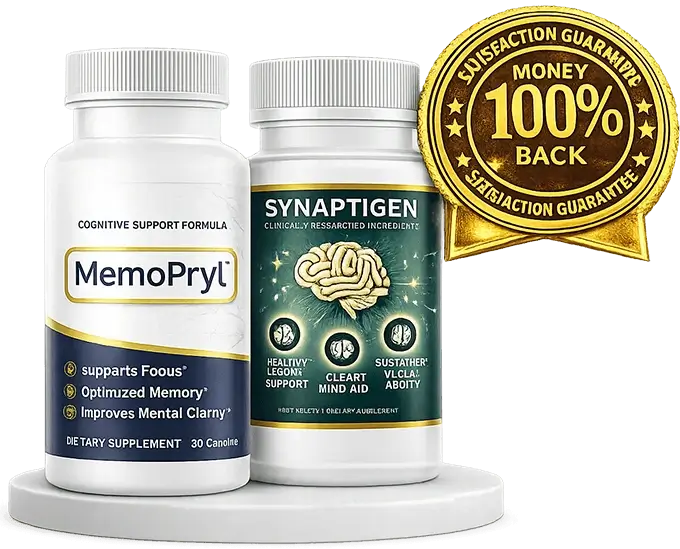
MemoPryl brings together 5 of the ingredients with the strongest evidence above — Bacopa Monnieri, Rhodiola Rosea, Panax Ginseng, L-Theanine, and BCAAs (2:1:1) — at sensible doses, in an FDA-registered, GMP-certified facility in the USA. No proprietary blends, no overnight promises.
Get MemoPryl — Special Offer Available →60-Day Money-Back Guarantee · Free U.S. Shipping · Non-GMO Formula
Where MemoPryl Fits In
MemoPryl was designed around the question this article asks: which ingredients really work? Rather than chasing exotic novelty compounds, it combines the better-evidenced botanicals and nutrients into a single daily capsule, with the doses disclosed. That does not make it magic — no supplement is — but it puts it in the category of products built on evidence rather than hype.
If you want to see how it compares with buying ingredients individually or against other popular formulas, our comparison of MemoPryl with other nootropics lays out the trade-offs, and our deep dive on how effective MemoPryl is looks at the formula ingredient by ingredient.
Setting Realistic Expectations
Even the best memory pill works within limits. Here is what reasonable looks like:
"The supplements that work do not replace your brain's fundamentals — they support a brain that is already sleeping, moving, and eating well. Used that way, the right ingredients can offer a real, if modest, edge."
— Rafael ReuterExpect gradual gains over weeks, most noticeable in recall, focus, and mental clarity. Expect the effect to be larger if you currently sleep poorly, eat a processed diet, or are low on key nutrients — because there is more room to improve. And expect any supplement to underperform if the basics are neglected.

When to See a Doctor
is sudden or severe; worsens steadily over weeks or months; causes you to get lost in familiar places; interferes with managing money, medications, or daily tasks; is noticed more by family than by you; or comes with confusion, personality changes, or trouble finding words. These can signal conditions that need professional diagnosis, and the earlier they are addressed, the better the options.
Frequently Asked Questions
Do any of the memory pills really work?
Yes, but only some of them. The benefit comes from specific, clinically dosed ingredients rather than the brand. Bacopa Monnieri (recall and learning), Ginkgo Biloba (cerebral blood flow), omega-3 DHA, B vitamins when you are deficient, L-theanine with caffeine (focus), and phosphatidylserine have real human evidence. Many products under-dose these or hide them in proprietary blends, which is why the average memory pill underperforms while a well-built one can genuinely help.
How long do memory pills take to work?
It depends on the ingredient. Focus-oriented compounds like L-theanine can be felt within days, while the strongest memory ingredient, Bacopa Monnieri, typically takes 8 to 12 weeks of daily use before its effect on recall becomes measurable. Any pill promising instant results is selling a stimulant buzz or a placebo, not lasting memory support.
What is the most effective ingredient in memory pills?
Bacopa Monnieri has the most consistent human clinical evidence for improving memory recall and learning speed. Ginkgo Biloba is second, supporting cerebral blood flow. Omega-3 DHA and B vitamins form the nutritional foundation, especially for adults over 60.
Are memory pills safe?
Most evidence-backed memory ingredients are well tolerated in healthy adults, but they are not risk-free. Ginkgo can interact with blood thinners, and any supplement can interact with medications. Choose products made in FDA-registered, GMP-certified facilities, and talk to your doctor before starting if you take prescription drugs, are pregnant or nursing, or have a medical condition.
Can a memory pill replace sleep and exercise?
No. The supplements that work do so on top of good sleep, regular exercise, and a brain-healthy diet, not instead of them. Memory is consolidated during sleep, and exercise is one of the most reliable cognitive boosters known. A pill cannot offset chronic neglect of these fundamentals.
What is the biggest red flag in a memory supplement?
A hidden 'proprietary blend' that lists a single combined weight instead of the dose of each ingredient. This makes it impossible to know whether the proven ingredients are present in meaningful amounts, and it usually conceals under-dosing. Transparent, per-ingredient dosing is the mark of a serious product.
Memory Support, Built on Evidence
If you want the better-evidenced memory ingredients in a single transparent daily capsule, MemoPryl combines Bacopa Monnieri, Rhodiola Rosea, Panax Ginseng, L-Theanine, and BCAAs (2:1:1) — made in an FDA-registered, GMP-certified facility in the USA.
Get MemoPryl — Special Offer Available →60-Day Money-Back Guarantee · Free U.S. Shipping · Non-GMO Formula