If you are over 60 and thinking about a memory supplement, you have probably already weighed the marketing claims. But there is a more important question that the ads never address: is it safe to take alongside the medications you are already on?
That question matters more for older adults than for almost anyone else. Surveys find that a large share of seniors who take supplements also take prescription drugs at the same time — and a review of the research put concurrent use somewhere between roughly a quarter and four-fifths of older adults, with the highest-risk combinations involving blood thinners. Just as concerning, doctors are often never told about the supplement at all.
This guide gives you the straight answer. We will cover how safe brain supplements really are, the side effects that actually occur, the specific drug interactions worth knowing, who should be cautious, and exactly how to use these products responsibly. We will use the ingredients in MemoPryl as a concrete reference, and we will be honest about where caution is needed.
For most healthy seniors, brain supplements made from clinically studied natural ingredients are generally well tolerated . The biggest safety issue is not the supplement alone but interactions with medication — especially blood thinners (warfarin, aspirin, clopidogrel), diabetes drugs, and blood-pressure medication. Side effects are usually mild and digestive. The golden rule for anyone over 60 on prescriptions: review any new supplement with your doctor or pharmacist before you start , stop herbal products 2–3 weeks before surgery, and never assume "natural" means "no interactions."
Key Takeaways
- Quality natural brain supplements are generally well tolerated by healthy older adults.
- The main risk is drug interactions — blood thinners are the single most important category.
- Most side effects are mild: stomach upset (take Bacopa with food) or jitteriness from adaptogens.
- Stop herbal supplements 2–3 weeks before any scheduled surgery.
- "Natural" does not mean risk-free — these ingredients are biologically active.
- Always tell your doctor and pharmacist every supplement you take, and bring the label.
How Safe Are Brain Supplements, Really?
Let us start with the reassuring part. The clinically studied natural ingredients most often used for memory — such as Bacopa Monnieri, L-Theanine, and ginseng — have been used safely in research studies, sometimes for years, in healthy adults at sensible doses. The everyday side effects people report are usually mild.
But "safe in a study of healthy volunteers" is not the same as "safe for a 68-year-old on three prescriptions." That gap is the whole point of this article. The dietary supplement industry is regulated differently from pharmaceuticals: products do not need FDA approval before sale, so quality and honesty vary enormously between brands. And the people most likely to take memory supplements — older adults — are also the people most likely to be on medication that can interact.
So the realistic verdict is this: a well-made supplement is generally safe for a healthy senior, and meaningfully riskier for one taking certain medications who has not checked first.
The danger is rarely the supplement by itself. It is the supplement plus a medication nobody screened for.
Common Side Effects
When side effects happen with natural brain supplements, they are usually mild and fall into a few predictable groups.
Digestive upset
The most common complaint. Bacopa Monnieri in particular can cause nausea, stomach cramping, or loose stools — which is exactly why it should be taken with food . Doing so resolves the issue for most people.
Jitteriness or restlessness
Energizing adaptogens such as Rhodiola Rosea and Panax Ginseng can cause jitteriness, anxiety, or trouble sleeping in sensitive people, especially at higher doses or when stacked with caffeine. Taking them earlier in the day helps.
Drowsiness
On the flip side, Bacopa can feel relaxing and may cause mild fatigue or sedation in some people. Pay attention to how you respond before driving or operating machinery on a new supplement.
Headache or allergic reaction
Less common, but possible with any new product. A rash, swelling, or difficulty breathing is a reason to stop immediately and seek care.
| Side effect | Most likely from | How to reduce it |
|---|---|---|
| Nausea / stomach upset | Bacopa Monnieri | Take with food |
| Jitteriness / poor sleep | Rhodiola, Ginseng | Take earlier in the day; avoid extra caffeine |
| Mild drowsiness | Bacopa Monnieri | Note your response before driving |
| Headache | Various | Stay hydrated; reduce dose |
| Allergic reaction | Any ingredient | Stop immediately; seek care |
The Drug Interactions That Matter
This is the most important section in the guide. If you take prescription medication, read it carefully and then talk to your doctor.
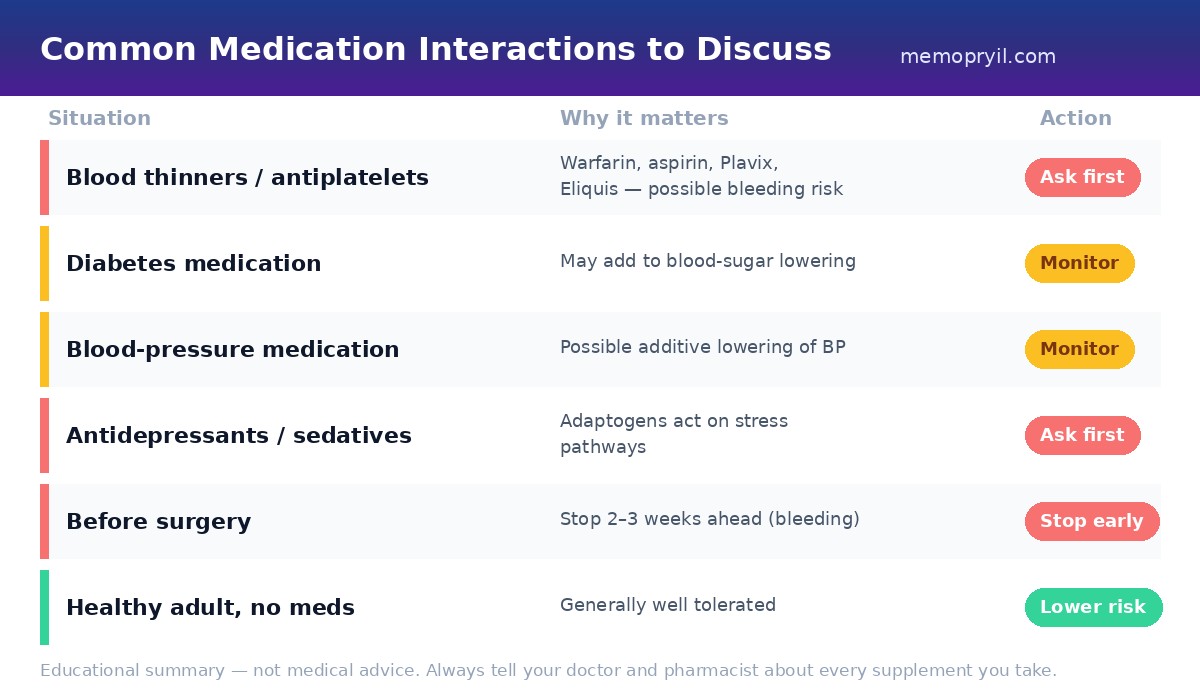
Blood thinners and antiplatelet drugs — the big one
This is the interaction category that causes the most documented harm in older adults. Ginkgo Biloba is the classic offender: health authorities including the NIH's National Center for Complementary and Integrative Health note it may increase bleeding risk when taken with anticoagulants such as warfarin, and with antiplatelet drugs like aspirin and clopidogrel. Panax Ginseng can work the other way, potentially reducing the effectiveness of warfarin and raising clot risk. If you take any blood thinner or daily aspirin, this alone is reason enough to check with your doctor first.
Diabetes medication
Several botanicals, including Bacopa and ginseng, may add to the blood-sugar-lowering effect of diabetes drugs, which can push blood sugar too low. If you manage diabetes, monitor closely and involve your doctor.
Blood-pressure medication
Some ingredients can have a mild additive effect on blood pressure. L-Theanine, for instance, may lower it slightly. For most people this is minor, but combined with antihypertensive drugs it is worth a conversation.
Antidepressants and sedatives
Adaptogens act on the body's stress and neurotransmitter pathways, so they can in theory interact with antidepressants and sedatives. This is an "ask your doctor" category rather than a flat prohibition.
The liver-enzyme issue
Bacopa Monnieri can influence the liver enzymes (the cytochrome P450 family) that metabolize a large share of prescription drugs. By slowing or speeding how a drug is cleared, this can raise or lower that drug's levels. It is one more reason a pharmacist's review is valuable if you take multiple medications.
If you take a blood thinner, diabetes medication, blood-pressure medication, antidepressants, or are scheduled for surgery, do not start any brain supplement without first reviewing it with your doctor or pharmacist. Bring the full label to your appointment.
Safety by Ingredient
Different formulas contain different things, so it helps to know the profile of common ingredients. Note that the ingredients vary by product — for example, Ginkgo is widely used but is not in every formula.
L-Theanine
One of the gentlest nootropics. May lower blood pressure slightly. Rarely causes side effects.
Bacopa Monnieri
Can cause stomach upset. May affect liver-metabolized drugs, warfarin, diabetes and BP meds.
Rhodiola Rosea
May cause jitteriness; can interact with antidepressants. Best taken earlier in the day.
Panax Ginseng
May reduce warfarin's effect and interact with diabetes drugs. Over 100 reported interactions.
BCAAs
Amino acids the body uses normally. Well tolerated for most healthy adults.
Ginkgo Biloba
Common in other formulas. Strongest bleeding-risk interaction with blood thinners; stop before surgery.
Prefer a fully disclosed label so you can show your doctor exactly what is inside? MemoPryl lists its five ingredients openly rather than hiding doses in a proprietary blend.
See MemoPryl →Who Should Be Cautious
Most healthy seniors can use a quality brain supplement safely. But some situations call for a doctor's guidance first rather than self-starting.
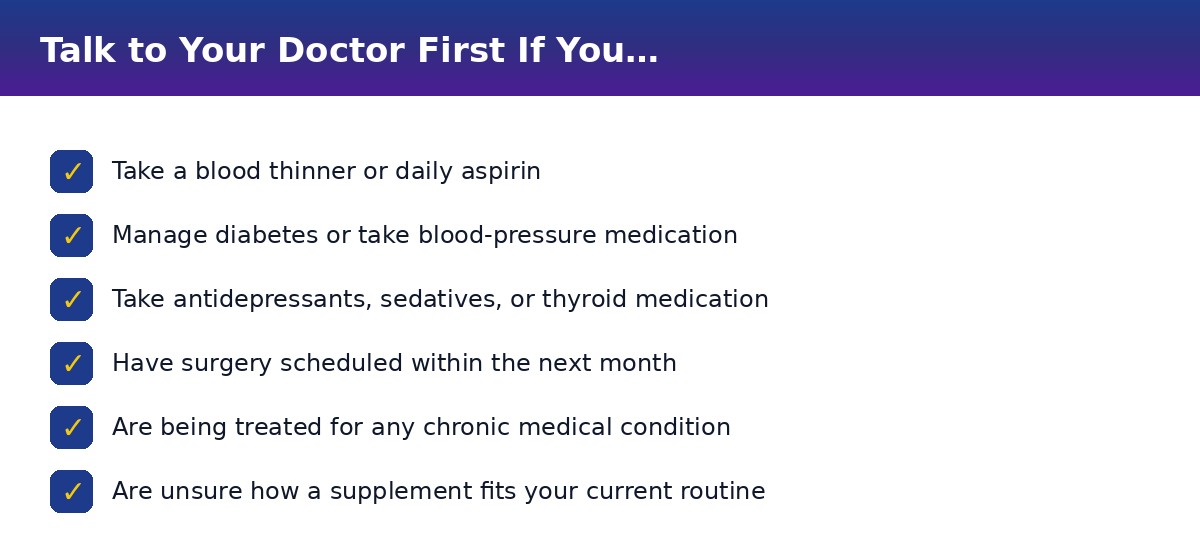
- You take a blood thinner, antiplatelet drug, or daily aspirin.
- You manage diabetes or take blood-pressure medication.
- You take antidepressants, sedatives, or thyroid medication.
- You have surgery scheduled within the next month.
- You are being treated for any chronic or serious condition.
- You are pregnant or breastfeeding (rare in this age group, but it matters).
Supplements and Surgery
This deserves its own section because it is so often overlooked. Several brain-supplement ingredients, Ginkgo above all, can slow blood clotting and increase bleeding during and after an operation.
The standard guidance, echoed by the American Society of Anesthesiologists, is to stop herbal and brain supplements two to three weeks before elective surgery . Just as important, tell your surgical team and anesthesiologist about everything you take, including the products you think of as harmless. A supplement you forgot to mention is exactly the kind of detail that complicates a procedure.
The "Natural Equals Safe" Myth
It is worth saying plainly: natural does not mean risk-free. Plenty of powerful drugs began as plant compounds. An ingredient that is gentle for one person can interact dangerously for another who is on the wrong medication.
The healthiest mindset is to treat a supplement with the same respect you would give a medicine. Know exactly what is in it, follow the dose on the label, do not assume more is better, and loop in the professionals who know your full health picture. Done that way, natural nootropics have a genuinely reassuring safety record for most older adults.
Treat a supplement like a medicine: know the ingredients, follow the label, and tell your doctor.
How to Choose a Safe Brain Supplement
Safety starts before you swallow the first capsule — it starts with which product you trust. A trustworthy formula tends to share these traits.
- A fully disclosed label. Every ingredient and its amount listed — not hidden inside a "proprietary blend."
- Clinically studied ingredients at sensible doses. Recognizable compounds with real research behind them.
- GMP manufacturing. Made in a facility following Good Manufacturing Practices.
- A real company. Clear contact details, a physical address, and responsive support.
- A money-back guarantee. A sign the company stands behind the product.
- No disease-cure claims. Promises to "cure" or "treat" a disease are both a legal violation and a trust red flag.
How to Use Brain Supplements Safely
- Clear it with your doctor or pharmacist first if you take any medication.
- Start with one new product at a time so you can tell what causes any effect.
- Take it with food to reduce stomach upset and aid absorption.
- Follow the label dose. Doubling up does not speed results and raises risk.
- Keep a list of everything you take and bring it to every appointment.
- Stop and report any unusual bleeding, bruising, rapid heartbeat, or allergic signs.

A Note on MemoPryl's Profile
MemoPryl is built from five natural ingredients — L-Theanine, Bacopa Monnieri, Rhodiola Rosea, Panax Ginseng, and branched-chain amino acids — all of which are widely used and, at sensible doses, generally well tolerated by healthy adults. Notably, it does not contain Ginkgo Biloba, the ingredient with the strongest blood-thinner interaction.
That said, the honest guidance is identical to the guidance for any brain supplement: if you take prescription medication — especially a blood thinner, diabetes drug, or blood-pressure medication — review the full label with your doctor before starting. A disclosed label makes that conversation easy, which is one practical reason to favor transparent products.
When to Talk to Your Doctor
come on suddenly; worsen steadily over weeks; cause you to get lost in familiar places; interfere with managing money, medications, or daily tasks; are noticed more by family than by you; or arrive with confusion, personality changes, or trouble finding words. No supplement is a substitute for a proper diagnosis, and the earlier such symptoms are evaluated, the better the options.
Frequently Asked Questions
Are brain supplements safe for seniors?
For most healthy older adults, well-formulated brain supplements made from clinically studied natural ingredients are generally well tolerated. The real safety question is not the supplement on its own but how it fits with your medications and health conditions. Because adults over 60 are more likely to take prescription drugs — especially blood thinners, diabetes, and blood-pressure medication — the most important safety step is to review any new supplement with your doctor or pharmacist before starting.
What are the side effects of brain supplements?
Most side effects are mild and digestive: nausea, stomach cramps, or loose stools, which is why ingredients like Bacopa Monnieri should be taken with food. Stimulating adaptogens such as Rhodiola or ginseng can cause jitteriness, restlessness, or trouble sleeping in sensitive people, especially at higher doses or combined with caffeine. Serious side effects are uncommon with natural ingredients at normal doses, but stop and see a doctor if you notice unusual bleeding, bruising, a rapid heartbeat, or an allergic reaction.
Do brain supplements interact with blood thinners?
Some can, and this is the most important interaction to know about. Ginkgo Biloba is the best-known example — it may increase bleeding risk when combined with warfarin, aspirin, or antiplatelet drugs like clopidogrel. Panax Ginseng may reduce the effectiveness of warfarin, and Bacopa Monnieri can affect how the liver processes certain drugs. If you take any blood thinner or daily aspirin, do not start a brain supplement without clearing it with your doctor first.
Can I take brain supplements with my medications?
Often yes, but it must be checked individually rather than assumed. The categories that need a conversation with your doctor are blood thinners and antiplatelets, diabetes medication, blood-pressure medication, antidepressants and sedatives, thyroid medication, and any chemotherapy. Bring the full supplement label to your appointment so your doctor and pharmacist can screen for interactions against your exact prescriptions.
Should I stop brain supplements before surgery?
Yes. As a general rule, stop any herbal or brain supplement at least two to three weeks before scheduled surgery, because several ingredients — Ginkgo in particular — can increase bleeding. The American Society of Anesthesiologists recommends discontinuing herbal products before elective surgery. Always tell your surgical team about every supplement you take, even ones you consider harmless.
Who should not take brain supplements?
Caution is warranted for anyone who is pregnant or breastfeeding, has a bleeding disorder or takes blood thinners, has a scheduled surgery, manages diabetes or low blood pressure, takes antidepressants or sedatives, or is being treated for any serious medical condition. People with these situations should not avoid supplements outright but should only use them under the guidance of a healthcare provider who knows their full medication list.
Are natural brain supplements safer than prescription drugs?
"Natural" does not automatically mean "risk-free," and it does not mean "no interactions." Natural nootropics tend to have milder side-effect profiles than stimulant drugs and are generally well tolerated, but they are still biologically active and can interact with medication. The safest approach is to treat a supplement with the same seriousness as a medicine: know the ingredients, follow the label, and tell your doctor.
How do I choose a safe brain supplement?
Look for a fully disclosed label that lists each ingredient and its amount rather than hiding doses in a "proprietary blend," clinically studied ingredients at sensible doses, manufacturing in a facility that follows Good Manufacturing Practices, a clear company and contact details, and a money-back guarantee. Avoid products that make disease-cure claims, since that is both a legal red flag and a sign of an untrustworthy seller.
Support Your Memory — the Informed Way
You now know the safety questions to ask and the interactions to check. If you want five clinically studied, openly disclosed ingredients in one daily capsule — with a label you can take straight to your doctor — MemoPryl is built for exactly that.
Get MemoPryl — Special Offer Available →180-Day Money-Back Guarantee · Free U.S. Shipping · Non-GMO Formula